
Evidence Without the Headache: A Clinician’s Survival Guide
Evidence Without the Headache: A Clinician’s Survival Guide
2 hours
The instructors
Overview
Research in physiotherapy, especially in pelvic health, can often feel messy, contradictory, and difficult to apply in day-to-day practice. This webinar aims to make the process simpler. It will introduce practical ways to stay evidence-informed and share tools that help quickly recognize which studies are worth reading in depth and which are not, making it easier to navigate confusing results and critically interpret new papers.
The session will also explore how clinical experience and research evidence can be integrated - showing that effective practice is not a choice between one or the other, but a thoughtful combination of both.
Participants will work through real-world examples and common interpretation pitfalls, with the goal of building greater confidence and reducing the sense of overwhelm when translating research into meaningful clinical care.
Instructor: Malgorzata Starzec-Proserpio
What's Included
Registering for this session registers you for the full Year of Mentorship program. Alongside the recording, slides, and written summary from Embracing a Trauma-Based Approach (Part 1), you'll get:
- Every other session in the year — live or recorded, plus its own summary and associated resources
- Two monthly office hours (North America and Europe/South Africa) for live clinical Q&A, recorded if you can't make it live
- Downloadable patient education handouts and infographics
- Full-year access to the discussion forum
See the full program breakdown →
Part of a Year-Long Program
This session is part of Carolyn Vandyken’s Year of Mentorship program.
- Learn from Carolyn Vandyken and an esteemed international group of 12 clinical and academic leaders in pelvic health!
- 2 hours every other Thursday from January 14 - December 16, 2027 (excluding July and August)
- Monthly Office Hours on the first Sunday of every month
- A discussion forum on Embodia where you can ask questions and have meaningful discussions with participants in the program throughout the year. Participants from the 2026 cohort will be invited to join the forum.
- Throughout the year-long mentorship, you will be paired with a lab partner and will present case studies to each other.
- Bring your own partner (a colleague or friend) to each receive 25% off the program cost.
- Visit the bundle page for full pricing details.
Registration is available for the full program only; individual sessions cannot be purchased separately. Visit the bundle page to learn more and register.
The instructors
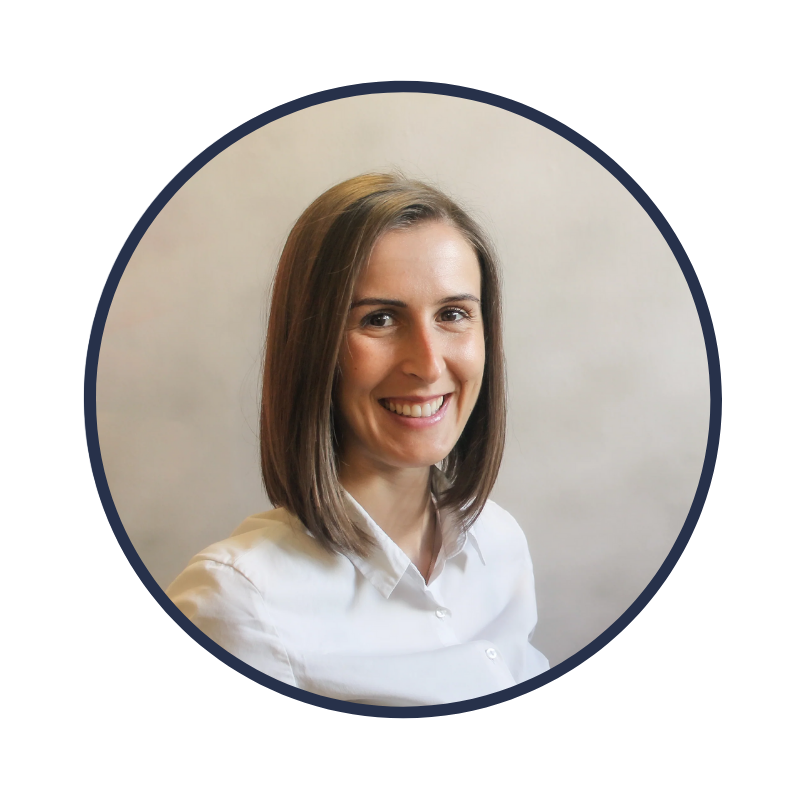
Women's Health Physiotherapist, Researcher, and Educator
Malgorzata has taken numerous post-graduate courses in women’s health physiotherapy. Since 2016, Malgorzata has worked as a women’s health physiotherapist in leading health care settings in Poland: St. Sophia Specialist Hospital in Warsaw and a sexology clinic Lew-Starowicz Therapy Center. Malgorzata prides herself in delivering high-quality care through every stage of a woman's life, as well as multidisciplinary therapy for pelvic pain conditions like endometriosis and vulvodynia. She completed her PhD in Medical and Health Sciences at the Medical University of Warsaw in 2020. Currently, she continues to combine clinical practice with science as a researcher and lecturer at Centre of Postgraduate Medical Education (CMKP) in Warsaw.
I am a women's health physiotherapist, researcher, and educator with international experience gained in Poland, the Czech Republic, Norway, Spain, and Canada. In 2022, after working in leading women's health and sexology centers in Poland, I joined the Pelvic Health Research Laboratory, led by Professor Mélanie Morin at the Research Center of the Centre Hospitalier Universitaire de Sherbrooke, where I conduct my postdoctoral fellowship focusing on pelvic pain. Since the beginning of my career, I have been dedicated to improving perineal and pelvic health for women. I am deeply interested in bridging the gap between research and practice, making science more appealing, accessible, and "user-friendly." I am a member of the Polish Urogynecological Society, the International Pelvic Pain Society, and the International Association for the Study of Pain. I speak fluently in Polish, English and Italian.